
How to play Sheet Metal Tycoon
Everything you need for your first weeks in the garage and the move up to the factory. In the game, How to play on the title screen has Col walk you through day one a step at a time.
Your first day
You start with $20,000 and an empty double garage on the side of the house. Buy a treadle shear, a pedestal drill, a pan brake and a MIG welder from Build, and put them where the work will flow from one to the next. The clock stops while you set up.
Order sheet from the supplier under Inventory, down the bottom. You pay when you order, and the truck brings it first thing next morning. It takes your finished work away too, but only what's owed.
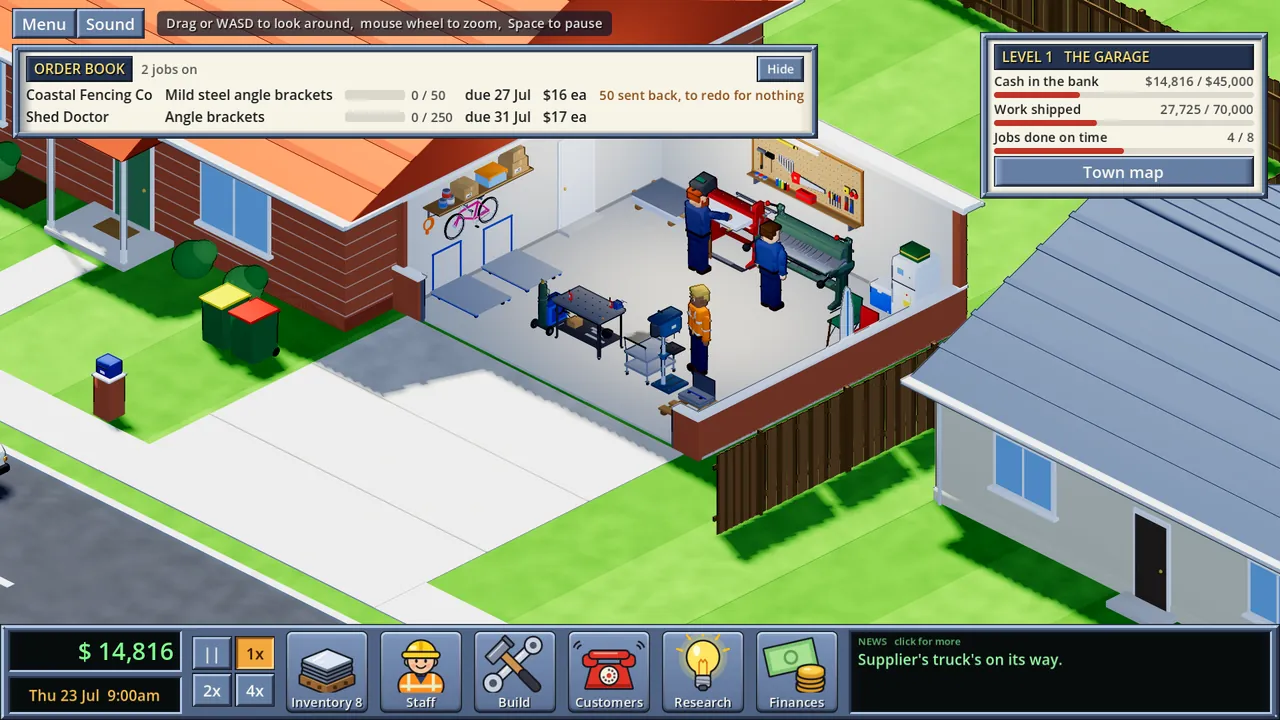
Quoting jobs
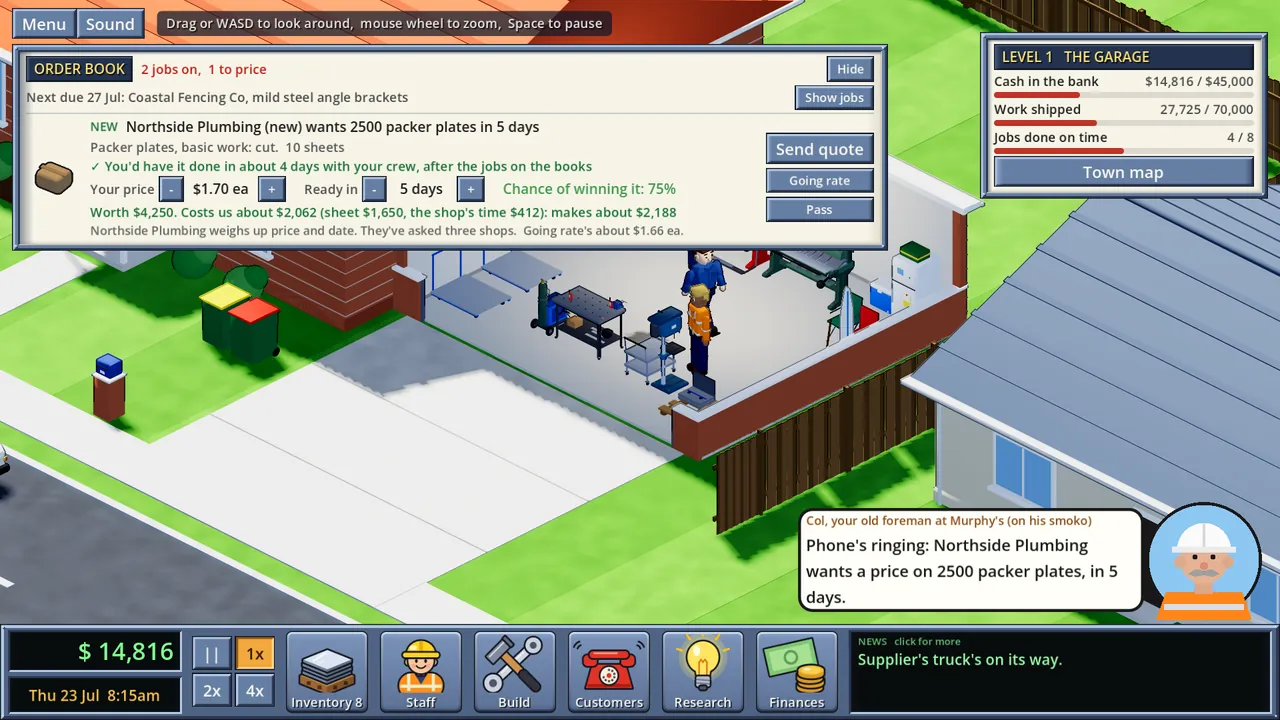
New work comes in as a customer wanting a price: so many of something, wanted in so many days. In the garage you start from the going rate. From the factory on, Priya in the office suggests a price and a date. Use − and + to go cheaper or dearer, sooner or later.
The card shows your chance of winning, about how many days the crew you've got would really take after the jobs already on the books, and what the job is worth against what it would cost you. Send the quote and they ring back in the morning.
Customers ask one or two other shops as well, and each buys their own way: some take the cheapest, some care most about the date, and some stick with a shop they know. Big jobs at the factory and the works are tenders against three named shops.
What you make
Six products to start, all made on the four garage machines. Every one is basic, standard or complex work, and the request tells you which.
| Product | Steps | Who buys it | Comes in |
|---|---|---|---|
| Packer plates | cut | builders, plumbers | boxes of 250 |
| Cover plates | cut, drill | electricians | bundles of 100 |
| Kick plates | cut, drill, fold | cafes, schools | bundles of 20 |
| Angle brackets | cut, drill, fold | shed builders, fencers | bundles of 50 |
| Weld-on brackets | cut, drill, fold, weld | trailer and ute shops | lots of 50 |
| Letterboxes | cut, fold, weld | locals, schools | lots of 5 |
Work out planter boxes, rainwater heads and switchboard enclosures under Research for three more. Later come galv, mild steel, aluminium, stainless and copper, and stainless and aluminium need TIG welding.
Money
Prices and wages are real Australian figures. A weld-on bracket sells for about $30 to $40, and a tradie costs about $200 to $350 a day. Rent, wages, super and bills come out every Friday.
When a job's out the door, the office tells you what it made or lost, and why: it was late, it was sent back, a trade took twice as long, or it was priced under cost. Finances lists the hours nobody was on a job, so you can tell a pricing problem from too many hands.
Your crew
Job seekers turn up each Monday under Staff. Everyone is somewhere from first-year apprentice to senior tradesperson. Apprentices are cheaper but slower and make more mistakes, and first and second years are kept off complex work. The hours on the tools move them up, and Training sends them on a TAFE block, a trade ticket or a leading hand course.
The day runs 7am to 3pm, with smoko at ten and lunch at half twelve. The crew get tired, have moods, ask for a pay rise a month after starting, ring in crook now and then, and hand in their notice after a week of being fed up. Click anyone to see what they're doing and how they're going.
When things go wrong
Machines wear as they work, and below 40% one can break down. Fix it yourself for the cost of parts, or get the repairer in first thing next working day and have it good as new. Book a service before it breaks and you lose half a day instead.
The sheet truck turns up a day late now and then, the sheet price moves each month, and from the third week something goes wrong at most once a week: a customer pays a month late, or the power's out for the morning. Run machines on a Sunday in the garage and the neighbour rings, then the council.
Every few weeks something big happens and it's your call: a mine needing conveyor guards by Monday at triple the price, a builder's project manager walking the floor, or a recall.
Your name around town
Every customer remembers how you've treated them. Jobs out on time make them happy. Late jobs, faulty work sent back and never ringing back with a price all put them off. It adds up to the shop's name around town, from "Cowboys" to "Best in town". A good name brings more calls and lets you quote dearer and still win.
Moving to the factory
Meet the garage's goals and you're offered a factory unit on the estate: an empty shed you lay out yourself, with Priya for the office, Mick on a forklift and Col to run the floor. Mark out the office, the smoko room, the racking and a bay for each trade, and the crew move in.
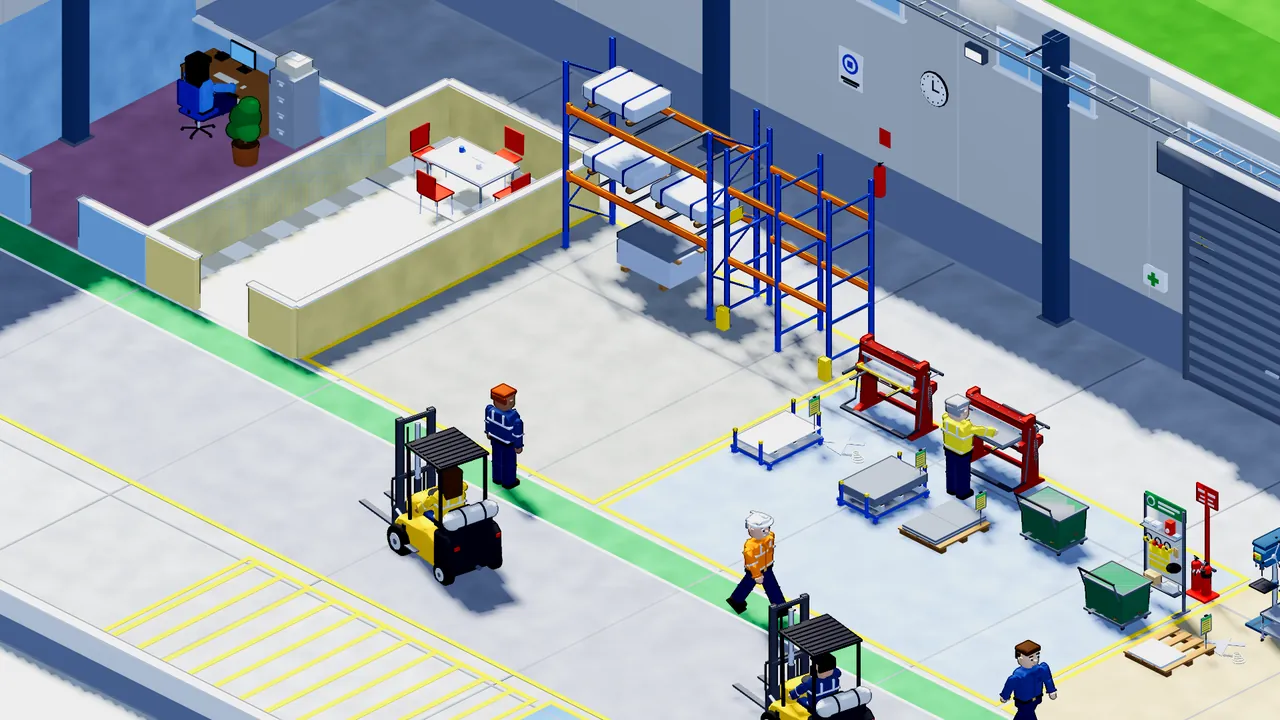
The factory costs about $7,600 a week before the floor crew's paid, so you'll only cover it by growing: more hands, a second of each machine, then a guillotine and a press brake. Jobs move between sections on pallets with yellow travellers, and Where's the work (B) shows which section is holding everyone up.
The works
Outgrow the factory and the bank writes. Have a look at the town map and move up to the works: 64 by 30 metres at the end of the estate, with room for 20 crew. A drafter draws up new parts for the CO2 laser, a punch press and a fibre laser take over the cutting, a tube laser cuts RHS, and your own blast room, powder booth and oven paint in-house.
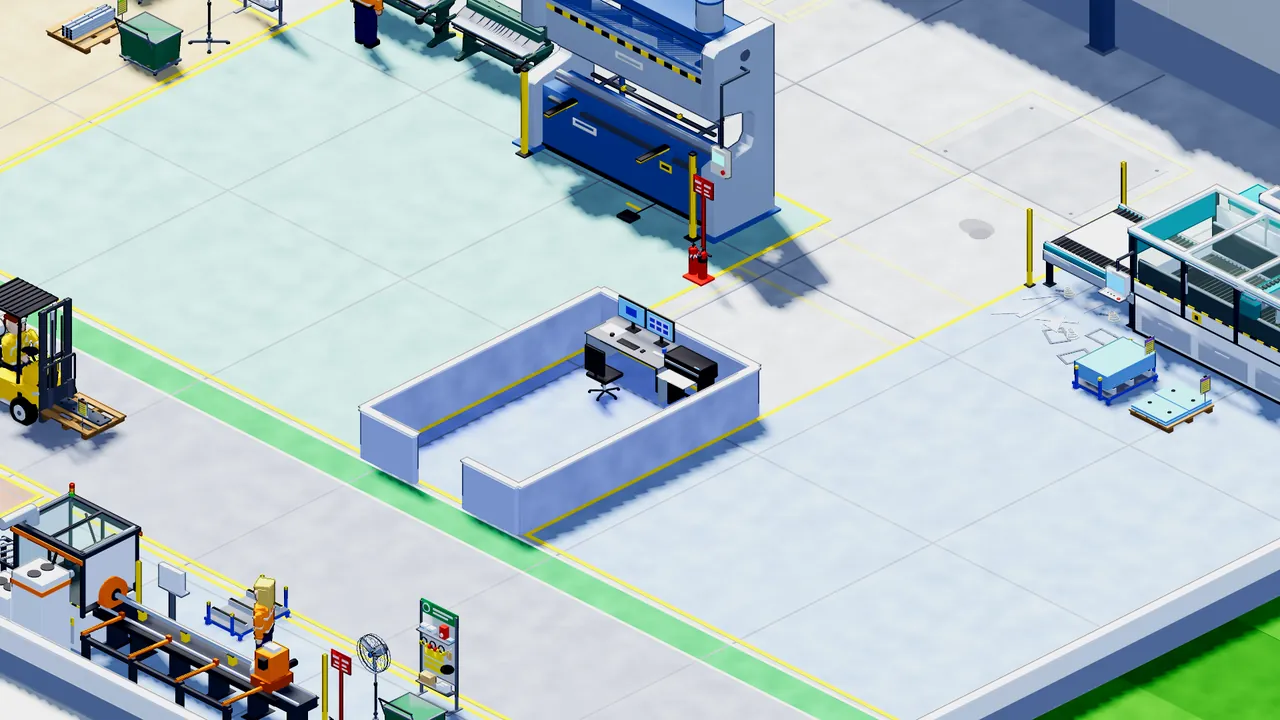
WorkSafe inspects the factory and the works unannounced, and every 1 July the Metal Trades Awards judge your year.
Controls
- Drag with the mouse, or use WASD or the arrow keys, to look around. The mouse wheel zooms.
- Space pauses. 1, 2 and 3 run the game at normal, twice and four times speed.
- Click a worker or a machine for its card. Esc closes whatever's open.
- B shows Where's the work, at the factory and the works.
- The news line at the bottom right opens the last 40 messages.
Saves and high scores
The game saves every morning in your browser. Press Save online on the title screen and sign in with your email (a 6-digit code, no password) and your game follows you to any computer. Signed-in shops go on the high score boards under their own name.